A feral cat named Sobie visited Donna Sicuranza’s farm for almost a year. He came looking for food and a safe place to sleep. At night, he waited behind the barn until she left food for him. He sometimes rested in the hayloft, but he remained too frightened of people to approach them.
Sicuranza hoped that she would eventually be able to trap Sobie and have him neutered. She never got the chance. He was struck by a car before she could catch him.
In a newsletter published by Tait’s Every Animal Matters, Sicuranza explained that Sobie’s death, along with similar experiences involving homeless cats, helped inspire a program supporting people who bring feral cats to the organization’s mobile clinic.
That firsthand account tells readers more about Donna Sicuranza than the unverified claims about her age, spouse, and personal wealth repeated by some biography websites. Her documented public story is connected to animal welfare, nonprofit leadership, affordable veterinary services, and a Connecticut mobile clinic that has operated since 1997.
Who Is Donna Sicuranza?
Donna Sicuranza, currently identified by Tait’s Every Animal Matters as Donna Sicuranza Marconi, is the organization’s Executive Director.
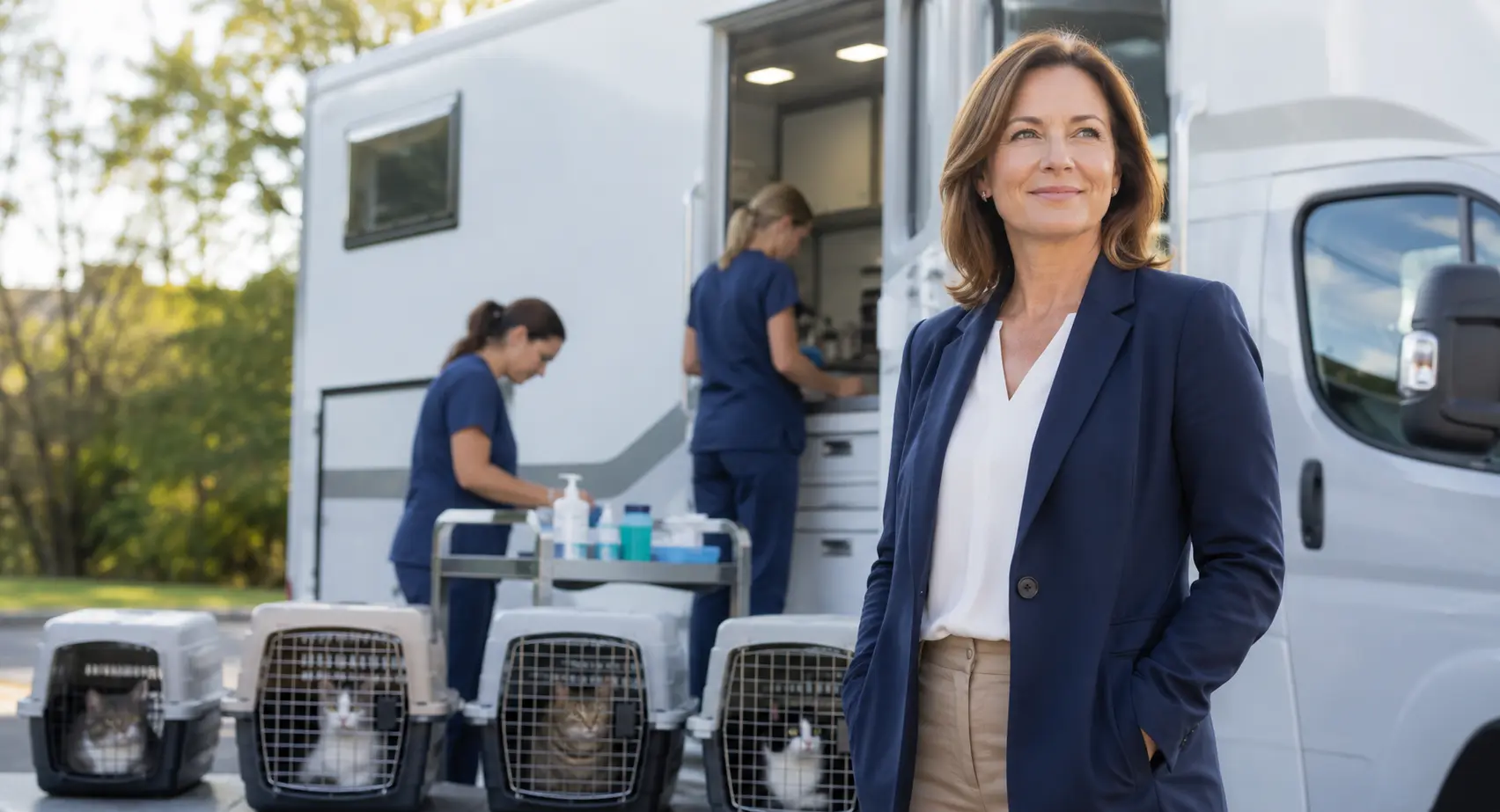
Tait’s Every Animal Matters, commonly called TEAM, operates a mobile feline spay, neuter, and vaccination clinic in Connecticut. TEAM says its veterinarians have sterilized and vaccinated more than 225,000 domestic and feral cats since the mobile program began in 1997.
Sicuranza helped develop the mobile clinic with veterinarian John A. Caltabiano during the 1990s. Her documented position is organizational rather than medical. TEAM separately lists Art Heller, DVM, as Medical Director and identifies its veterinary technicians as the staff responsible for supporting clinical work.
Her role is best understood as long-term nonprofit leadership. The clinic’s work requires more than veterinary surgery. It also depends on scheduling, public communication, fundraising, donor support, vehicle maintenance, community relationships, and continued program management.
Donna Sicuranza at a Glance
| Category | Verified or responsibly reported information |
|---|---|
| Current public name | Donna Sicuranza Marconi |
| Other published names | Donna Sicuranza and Donna J. Sicuranza |
| Current role | Executive Director |
| Organization | Tait’s Every Animal Matters |
| Organization acronym | TEAM |
| Professional field | Nonprofit leadership and animal welfare |
| Known for | Helping develop and lead TEAM’s mobile feline clinic |
| Main service area | Connecticut |
| Clinic planning began | 1996 |
| Mobile clinic launched | March 1, 1997 |
| Reported impact | More than 225,000 cats sterilized and vaccinated |
| Exact age | Not reliably confirmed |
| Spouse and children | Not reliably documented in reviewed sources |
| Personal net worth | Not publicly verified |
TEAM’s current staff page uses the name Donna Sicuranza Marconi. Its 2019 newsletter identifies Donna Sicuranza as Executive Director and editor, while an administrative staff listing uses Donna J. Sicuranza. These first-party records support the connection between the name variations and the same professional role.
Why Online Sources Confuse Two Different People
One of the most important facts about this topic is that Donna Sicuranza Marconi should not be confused with Donna Marie Sicuranza, a different woman whose obituary was published in 2017.
The obituary identifies Donna Marie Sicuranza as a New York resident who was born in 1942 and died on March 10, 2017. It describes a career at Walker Studios and the Bank of New York in Bronxville, where she retired as an assistant manager.
Those details do not match the current professional record for Donna Sicuranza Marconi. TEAM continues to list Donna Sicuranza Marconi as its Executive Director and connects her with its Connecticut animal-welfare work.
The shared name appears to have caused some websites to combine two unrelated biographies. As a result, the birth date, banking career, family details, and 2017 death of Donna Marie Sicuranza have sometimes been incorrectly attached to the TEAM executive.
A responsible biography must compare more than names. Employers, locations, professional roles, dates, and primary records must also match before information can be combined.
Publicly Reported Communications Background

Public professional profiles have associated Sicuranza with writing, editing, public relations, and communications work. However, those early-career and education details are not presented in a detailed biography on TEAM’s current website.
Her work as a communicator within TEAM is better documented. The organization’s 2019 newsletter identifies Donna Sicuranza as its editor and invites readers to contact her with questions and suggestions. The publication also shows her communicating with supporters about the clinic’s progress, programs, donors, and community impact.
These skills are relevant to nonprofit leadership. An executive director may need to explain an organization’s mission, communicate with donors, prepare public materials, support fundraising, represent programs, and maintain relationships with the communities being served.
Any detailed claims about her university education or early employers should still be described as publicly reported information unless they are confirmed through university records, an official biography, or a direct interview.
How the TEAM Mobile Feline Clinic Began
TEAM’s official history says plans for the Mobile Feline Spay/Neuter Clinic began in 1996 under the direction of John A. Caltabiano, DVM, and Executive Director Donna Sicuranza.
Caltabiano was an Old Lyme veterinarian and TEAM’s president at the time. The goal was to make feline sterilization and vaccination more affordable for Connecticut residents, including people caring for stray and feral cats.
The mobile clinic began operating on March 1, 1997. TEAM describes it as Connecticut’s first mobile clinic created specifically for feline spay, neuter, and vaccination services.
The idea faced skepticism. According to TEAM’s history, some veterinarians worried that a lower-cost program could take clients away from established practices. Others questioned whether surgery could be performed safely in a mobile unit.
The program continued despite those concerns. Within six months, TEAM reported completing 5,000 sterilization procedures. It reported reaching 8,000 cats by the clinic’s first anniversary.
TEAM also says its name and early financial support came from a bequest left by businessman and animal lover Vernon A. Tait. The organization says that support helped it develop services for animals and the people caring for them.
Did TEAM Treat 10 or 12 Cats on Its First Day?
TEAM’s own publications provide two different totals for the clinic’s first day.
A history published on the organization’s website in 2021 says that ten cats were spayed or neutered and vaccinated on March 1, 1997.
However, TEAM’s 2019 newsletter says that 12 cats were treated aboard the original 22-foot mobile clinic that day.
The available records do not explain the difference.
This is a minor historical discrepancy, but it should not be hidden. The accurate approach is to report that TEAM has published both numbers and provide the date of each source. Choosing one figure without acknowledging the other would create a false level of certainty.
What Does TEAM’s Mobile Clinic Do?
TEAM’s mobile clinic focuses on making feline sterilization and vaccination services accessible to Connecticut residents.
Its current service page says the surgery package includes spaying or neutering, rabies and distemper vaccinations, protection against certain respiratory infections, nail trimming, and ear-mite treatment when needed. The organization also publishes eligibility requirements related to a cat’s age, health, vaccination status, and Connecticut residency.
Any Connecticut cat, whether domestic or feral, may be eligible to use the clinic. TEAM currently lists stops in communities throughout the state, although it warns that locations are subject to change.
Fees, schedules, locations, and admission requirements may change. Readers seeking an appointment should therefore check TEAM’s official website or contact the organization instead of relying on prices or schedules published in older articles.
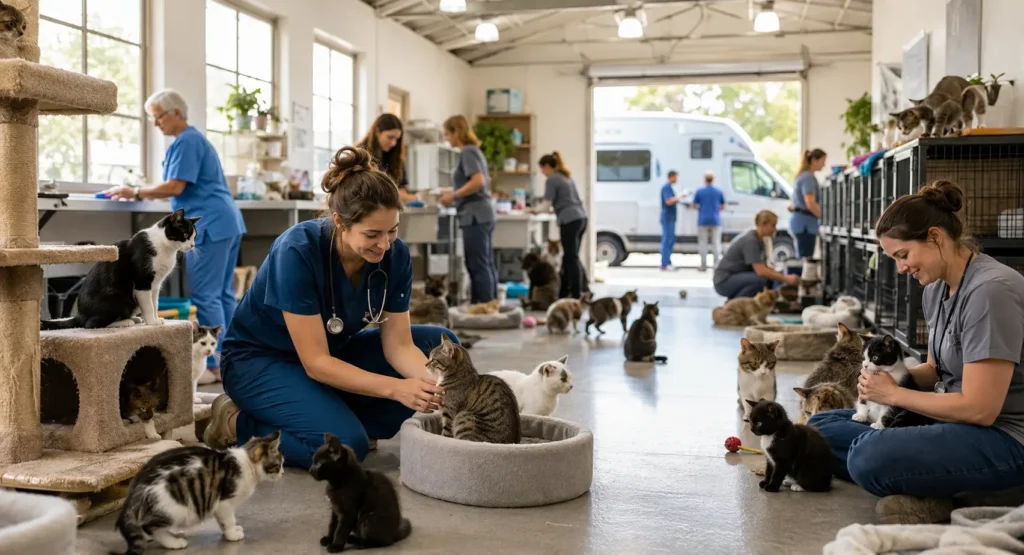
The mobile model addresses two practical barriers to veterinary care: location and affordability. Rather than operating from only one permanent site, the unit travels to different Connecticut communities.
TEAM says many people requesting appointments are on fixed incomes, are unemployed, have taken in a stray cat, or are searching for care they can afford.
TEAM’s Purpose Is Prevention
TEAM connects its work with the prevention of feline overpopulation.
The organization describes uncontrolled breeding as a problem that can contribute to unwanted kittens, abandonment, untreated illness, injury, abuse, and crowded shelters. Its approach is to sterilize cats before they produce additional litters.
The clinic’s role is specialized. It is not a replacement for a full-service veterinary hospital.
Cats may still need regular wellness examinations, emergency treatment, dental services, management of chronic conditions, diagnostic testing, and continuing care from a veterinarian. A mobile spay and neuter clinic addresses a narrower preventive need.
This distinction is important because Donna Sicuranza is sometimes described online with language that could make readers think she is a veterinarian. TEAM identifies her as Executive Director, not a veterinary doctor or surgeon.
Donna Sicuranza’s Role as Executive Director
The available public records do not provide a complete daily job description for Sicuranza. It would therefore be inappropriate to assign specific responsibilities to her without evidence.
What the records do show is that she was involved in developing the mobile clinic, communicating with supporters, editing organizational publications, representing TEAM in public proceedings, and serving as its Executive Director.
In the 2019 newsletter, Sicuranza described TEAM’s results as a collective effort. She credited the veterinary staff, office employees handling calls, maintenance workers, donors, and cat caretakers who trusted the organization.
Her statement highlights an important feature of nonprofit leadership: the public may associate a program with one executive, but sustained results depend on many people working together.
TEAM’s current staff page reflects that structure. It lists administrative personnel separately from Medical Director Art Heller, DVM, Senior Veterinary Technician Dina Sicuranza, and Veterinary Technician Susan King.
The Personal Experience Behind TEAM’s Feral-Cat Program
The story of Sobie offers rare firsthand insight into Sicuranza’s motivation.
In her published account, she described how the feral cat regularly visited her farm for food and shelter. After months of following the same routine, she believed she might finally be able to trap him for neutering. Sobie was killed by a vehicle before that could happen.
Sicuranza connected his story with the creation of the TEAM Incentive Program, known as TIP.
TEAM’s 2019 newsletter described TIP as a program for people bringing eligible feral cats to the clinic. Under the published guidelines, a cat had to arrive in a humane trap, receive an ear tip or notch to show that it had been sterilized, and be returned to the colony or location where it was trapped. Eligible caretakers could then apply for a partial rebate.
The newsletter used the term Trap, Neuter and Release. Many animal-welfare organizations now use the phrase Trap-Neuter-Return, but both refer to the process of humanely trapping a community cat, sterilizing it, identifying it as altered, and returning it to its original outdoor area.
TEAM reported in 2019 that more than 320 feral cats had passed through TIP since the program began in 2014. That is a historical figure and should not be treated as the current total.
Sobie’s story adds an important experience signal to Sicuranza’s biography. It shows that her involvement with feral-cat programs was connected not only to organizational policy but also to an animal she personally tried to help.
Donna Sicuranza’s Public Advocacy in Connecticut
Sicuranza’s public record extends beyond TEAM’s own website.
A March 2007 Connecticut General Assembly hearing transcript identifies her as a Westbrook resident and Executive Director of TEAM. She appeared during an Environment Committee hearing involving animal-welfare and population-control legislation.
Her participation shows that her role included representing the organization in formal public discussions. It also connects her work with broader questions involving affordable sterilization services, feral-cat caretakers, low-income pet owners, and state animal-population programs.
Connecticut Department of Agriculture records also list Donna Sicuranza of Tait’s Every Animal Matters as an attendee at Animal Population Control Program working-group meetings in 2019.
Topics discussed at those meetings included program funding, voucher systems, veterinary reimbursements, cat licensing, rabies records, animal-control reports, public education, and possible legislative recommendations.
Attendance does not mean Sicuranza created or controlled state policy. It does demonstrate that TEAM was represented in official discussions about Connecticut’s animal-population programs.
A Timeline of Donna Sicuranza’s Work With TEAM
1996: Planning the mobile clinic
TEAM says plans for the mobile feline clinic began under John A. Caltabiano, DVM, and Executive Director Donna Sicuranza.
March 1, 1997: The clinic begins operating
The original mobile unit took to the road. TEAM’s records report either ten or 12 cats treated on its first day.
1997–1998: Early growth
TEAM says the clinic completed 5,000 sterilization procedures within six months and 8,000 by its first anniversary.
2007: Legislative participation
A Connecticut General Assembly transcript records Sicuranza appearing as TEAM’s Executive Director during an Environment Committee hearing.
2014: TEAM Incentive Program begins
TEAM’s newsletter says TIP began supporting qualifying feral-cat caretakers in 2014.
2019: The 200,000th sterilization procedure
TEAM celebrated its 200,000th surgery. A rescued calico cat named Calypso was identified as the milestone patient.
2019: State working-group participation
Connecticut Department of Agriculture minutes list Sicuranza as a representative of Tait’s Every Animal Matters during Animal Population Control Program discussions.
2021: More than 206,000 cats
TEAM’s historical article reported that more than 206,000 domestic and feral cats had been sterilized and vaccinated at its clinics.
Current published milestone
As of this article’s July 23, 2026 fact check, TEAM’s staff page reports that its veterinarians have sterilized and vaccinated more than 225,000 cats since 1997.
What Is Known About Donna Sicuranza’s Personal Life?
Reliable public information about Sicuranza’s private life is limited.
The sources reviewed for this article do not establish her:
- Exact date of birth
- Current age
- Marriage or spouse
- Children
- Personal assets
- Salary
- Net worth
Several low-authority biography pages publish personal claims without showing reliable supporting evidence. Those claims should not be treated as confirmed facts.
No credible source reviewed for this article confirms claims linking the TEAM executive to actor Kevin Corrigan. The same caution applies to online net-worth estimates.
An organization’s revenue is not the same as an executive’s salary, and neither figure automatically reveals personal net worth.
Leaving unsupported information out of a biography is not a weakness. It is a basic requirement of trustworthy reporting.
Why Donna Sicuranza’s Work Matters
The significance of Sicuranza’s career does not depend on celebrity status.
TEAM’s mobile model brings preventive feline care to communities across Connecticut. It is designed to help people who may face financial or geographic barriers when seeking sterilization and vaccination services.
The program also demonstrates how medical and nonmedical roles depend on each other.
Veterinarians and veterinary technicians perform and support clinical procedures. Administrative staff coordinate appointments, communicate with caretakers, manage public information, maintain donor relationships, and help keep the organization operating.
Sicuranza’s documented contribution lies in helping develop and sustain that broader system.
The result is measurable. TEAM reports more than 225,000 cats sterilized and vaccinated since 1997. That figure belongs to the work of an entire organization, but Sicuranza has remained publicly connected with its executive leadership, communications, early development, and advocacy.
Frequently Asked Questions
Is Donna Sicuranza the same person as Donna Sicuranza Marconi?
TEAM’s current website identifies its Executive Director as Donna Sicuranza Marconi. Earlier official materials use Donna Sicuranza and Donna J. Sicuranza for the same executive role.
Is Donna Sicuranza the woman who died in 2017?
No. The 2017 obituary concerns Donna Marie Sicuranza, a New York banking professional. TEAM currently lists Donna Sicuranza Marconi as Executive Director.
Is Donna Sicuranza a veterinarian?
No. TEAM identifies her as Executive Director. It separately lists Art Heller, DVM, as Medical Director.
What is Donna Sicuranza known for?
She is best known for her leadership at Tait’s Every Animal Matters and her involvement in the development of its mobile feline spay, neuter, and vaccination clinic.
How many cats has TEAM helped?
TEAM’s current staff page reports that its veterinarians have sterilized and vaccinated more than 225,000 domestic and feral cats since 1997.
What does TEAM stand for?
TEAM stands for Tait’s Every Animal Matters. The organization says its name is connected with businessman and animal lover Vernon A. Tait, whose estate provided early support.
When did the TEAM mobile clinic begin?
The mobile clinic began operating on March 1, 1997, after planning started in 1996.
What is Donna Sicuranza’s net worth?
No reliable public source reviewed for this article provides a verified net-worth figure.
Conclusion
Sobie never became a household pet. Donna Sicuranza could not safely approach him, and she was unable to trap him before he was struck by a car. Yet his story did not end behind her barn.
Sicuranza used that personal experience to explain why support for feral-cat caretakers mattered. According to TEAM, Sobie and other cats like him helped inspire an incentive program that made it easier for caretakers to bring eligible feral cats for sterilization.
That story reflects the larger pattern of her documented career.
Donna Sicuranza Marconi is not best understood through an estimated age, an invented celebrity relationship, or a net-worth figure copied from one website to another. She is publicly documented as the Executive Director of Tait’s Every Animal Matters, an early leader in the development of its mobile feline clinic, an organizational communicator, and a participant in Connecticut animal-population discussions.
During the research for this profile, the clearest lesson was that information about Donna Sicuranza is not impossible to find. It simply has to be separated carefully from information about other people with the same name.
Once current staff records, historical newsletters, government documents, and the unrelated obituary are compared, the verified picture becomes much clearer.
TEAM says its veterinarians have sterilized and vaccinated more than 225,000 cats since 1997. Behind that number are individual animals, caretakers, veterinary professionals, donors, administrators, and stories like Sobie’s.
That documented record is more credible and more meaningful than any unsupported claim about private wealth or celebrity connections.