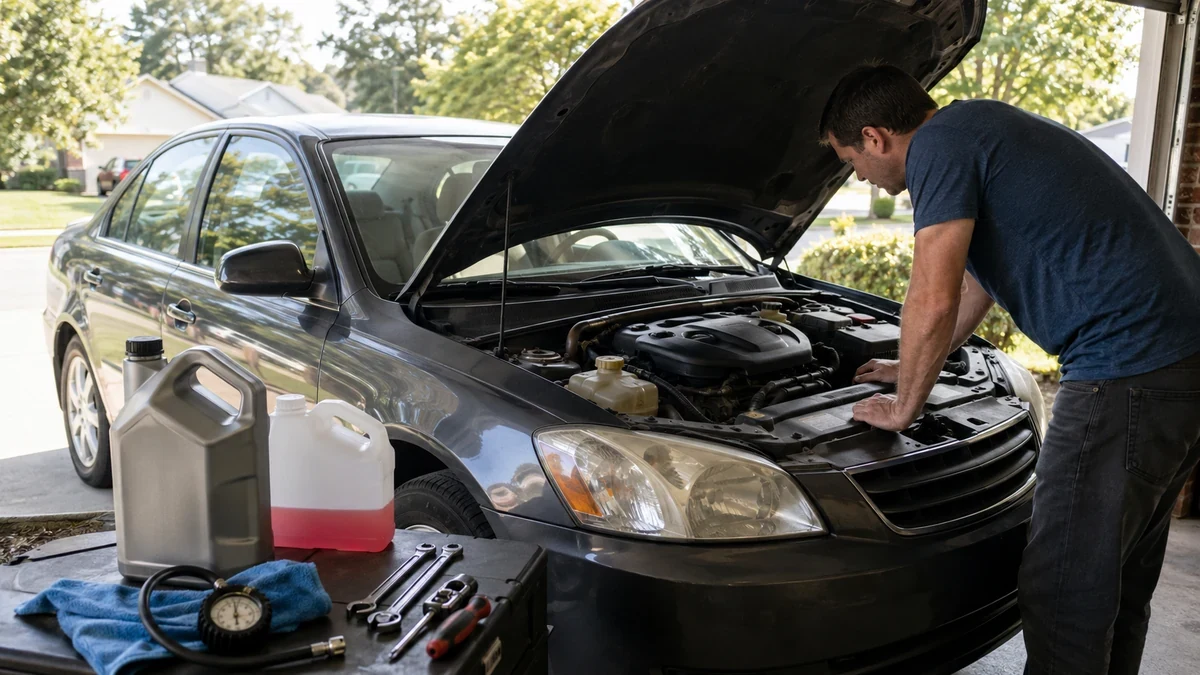
Regular car maintenance is usually far less expensive than repairing a vehicle after something fails.
A worn brake pad can damage a rotor. A small coolant leak can develop into an overheating problem. Low engine oil can accelerate internal wear. Incorrect tire pressure can shorten tire life and affect handling. Many expensive repairs begin as smaller maintenance issues that could have been addressed earlier.
The challenge for most drivers is not understanding that maintenance matters. It is knowing what to check, when to check it, and which warning signs should never be ignored.
These 15 essential car maintenance tips cover the systems that deserve the most attention, including engine oil, tires, brakes, coolant, batteries, filters, belts, fluids, warning lights, and suspension components.
There is no single maintenance schedule that applies to every vehicle. Model year, engine, transmission, mileage, climate, driving conditions, and manufacturer requirements can all affect what your car needs.
Always use your owner’s manual and vehicle-specific maintenance schedule as the final authority. Safety-critical repairs involving brakes, steering, high-voltage systems, or major drivetrain components should be handled by a qualified technician when they are beyond your experience.
Last reviewed: August 2026
1. Follow the Maintenance Schedule for Your Vehicle
The most important maintenance recommendation is also one of the easiest to overlook: follow the schedule designed for your exact vehicle.
Generic advice such as “replace this every 30,000 miles” can be useful as a reminder, but it should never override manufacturer instructions.
Your maintenance schedule may specify when to inspect or service:
- Engine oil and oil filter
- Tires
- Brakes
- Spark plugs
- Engine and cabin air filters
- Coolant
- Transmission fluid
- Belts and hoses
- Suspension and steering components
- Timing belt, where equipped
Many newer vehicles also use electronic maintenance reminders or oil-life monitoring systems.
Ford, for example, provides vehicle-specific maintenance schedules that can include oil and filter service, tire rotation, brake inspections, spark plugs, belts, hoses, shocks, struts, and multi-point inspections. Ford scheduled maintenance information
The goal is not to replace as many parts as possible. Good maintenance means servicing the right component at the right time.
2. Check Engine Oil and Change It When Required
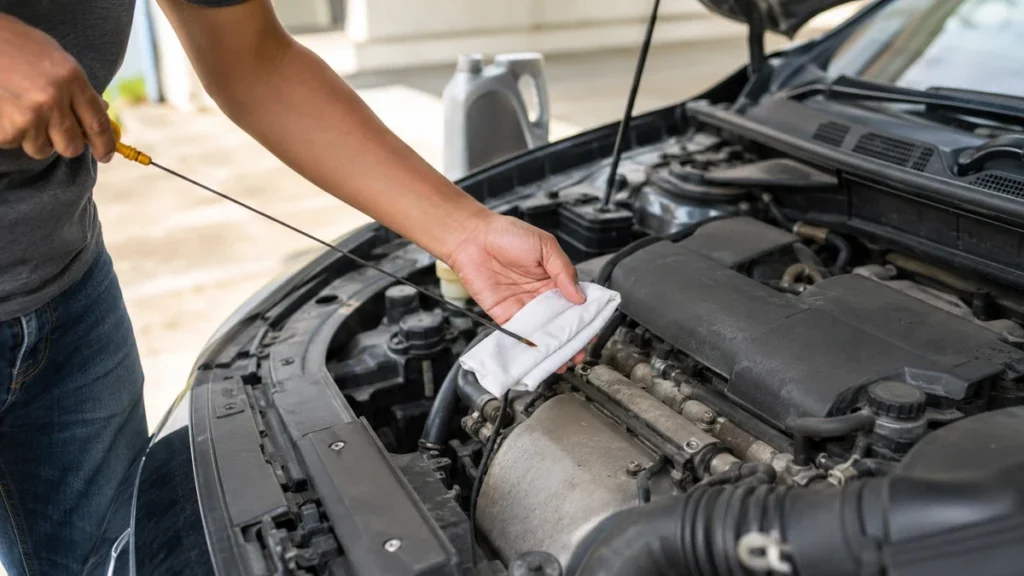
Engine oil performs several important jobs.
It lubricates moving components, reduces friction, helps control heat, carries contaminants toward the oil filter, and protects internal engine surfaces.
An engine operating with too little oil can suffer serious damage even if the oil itself is relatively new.
Check the oil level according to the procedure in your owner’s manual. Vehicles with conventional dipsticks should usually be parked on level ground. Some newer vehicles use electronic oil-level monitoring instead.
Pay closer attention before long trips and on older vehicles that may consume oil between services.
Warning Signs to Watch For
Look for:
- Oil spots beneath the vehicle
- Burning-oil smell
- Unusual ticking or knocking
- Increased oil consumption
- Smoke
- Oil-pressure warning light
An oil-pressure warning is not simply a reminder that an oil change is due. It may indicate a more serious lubrication problem.
Use the Correct Oil and Filter
Do not choose engine oil based only on brand or price.
The correct viscosity and manufacturer specification matter.
The same applies to the oil filter. Verify the vehicle, model year, engine, and correct filter specification before installing a replacement.
Two vehicles with the same model name can use different filters if they have different engines.
3. Check Tire Pressure at Least Once a Month
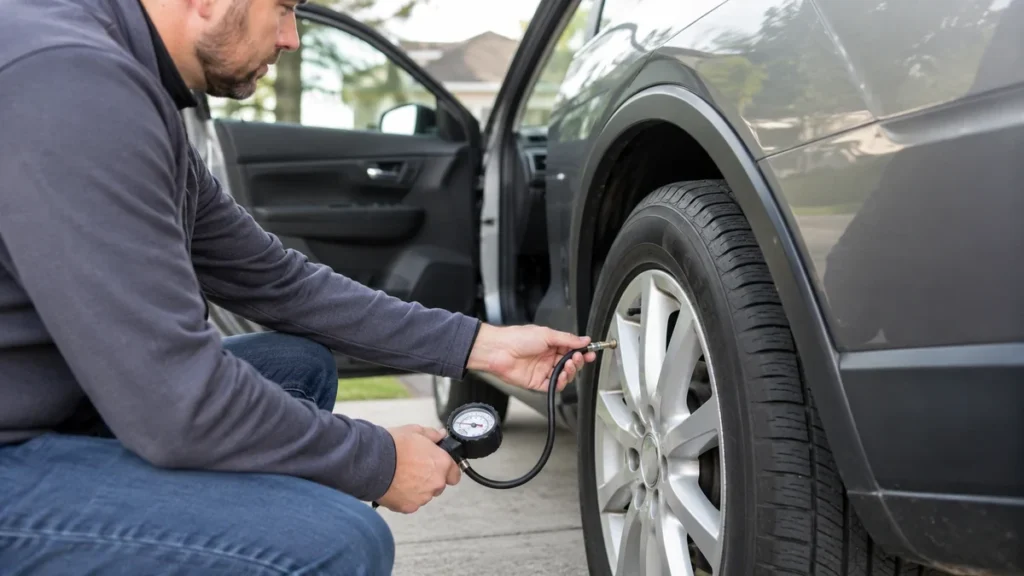
Your tires are the vehicle’s contact point with the road, so tire maintenance directly affects safety, handling, braking, tire wear, and fuel consumption.
Check pressure when the tires are cold.
The correct PSI is usually listed on the vehicle’s Tire and Loading Information label near the driver’s door or in the owner’s manual.
Do not confuse this number with the maximum pressure printed on the tire sidewall.
The National Highway Traffic Safety Administration recommends checking all tires, including the spare where applicable, at least once a month while they are cold. NHTSA also notes that a Tire Pressure Monitoring System does not eliminate the need for manual checks because a warning may not appear until a tire is already significantly underinflated. NHTSA tire safety guidance
What Does “Cold Tire” Mean?
For pressure measurement, NHTSA generally considers a tire cold when the vehicle has not been driven for at least three hours.
Keeping a quality tire-pressure gauge in the vehicle is a simple and inexpensive way to stay on top of tire maintenance.
4. Inspect Tire Tread and Uneven Wear
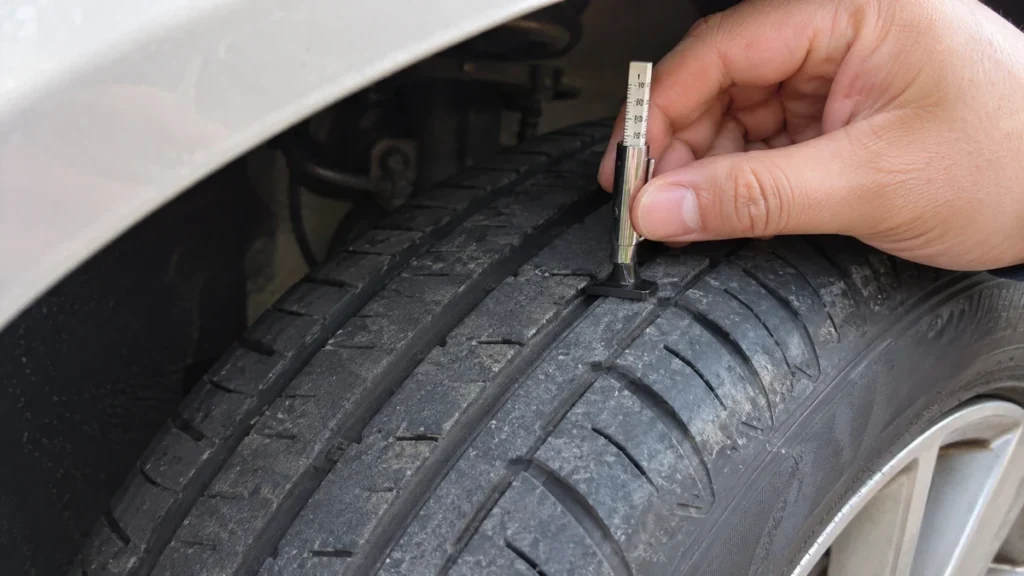
Correct pressure cannot make a damaged or badly worn tire safe.
Inspect the tread and sidewalls regularly.
Look for:
- Cracks
- Cuts
- Bulges
- Punctures
- Exposed cords
- Excessive shoulder wear
- Uneven tread patterns
Uneven tire wear can also reveal a problem elsewhere on the vehicle.
Possible causes include:
- Incorrect inflation
- Wheel alignment problems
- Wheel balancing issues
- Worn steering components
- Worn suspension parts
Do Not Ignore New Vibrations
A new vibration at road speed may come from a tire or wheel, but it can also involve other rotating or suspension components.
Persistent vibration deserves diagnosis rather than becoming something you simply get used to.
Rotate Tires Correctly
Tire rotation can help distribute wear more evenly, but there is no universal rotation pattern.
Vehicle drivetrain, tire type, wheel size, and staggered front and rear configurations can all affect whether and how the tires should be rotated.
Follow the vehicle and tire manufacturer’s recommendations.
5. Inspect Your Brakes Before They Begin Grinding
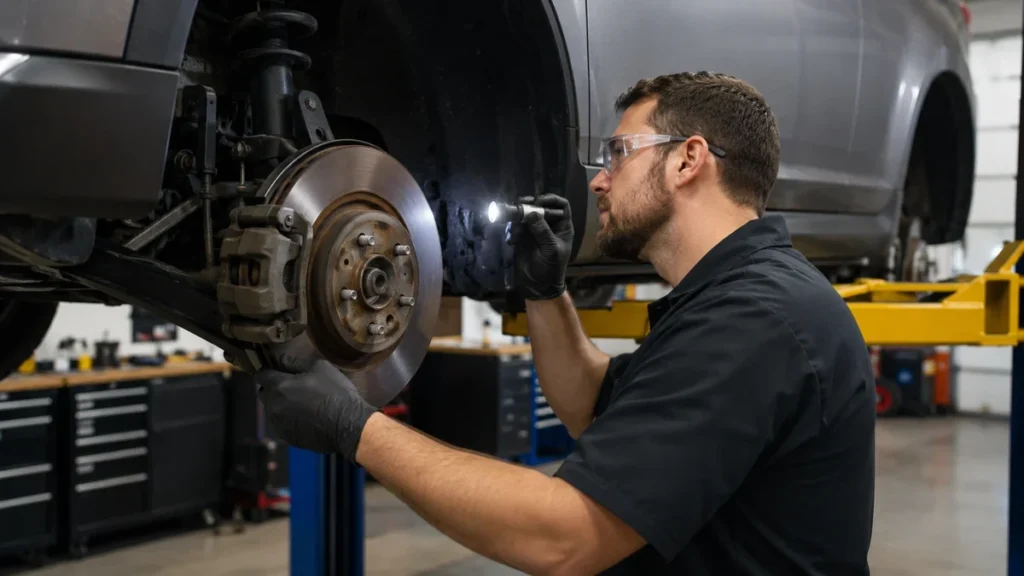
Brakes are one area where waiting can make a repair considerably more expensive.
Brake pads are designed to wear. The problem begins when severely worn pads remain in service and other components become damaged.
Watch and listen for:
- Squealing
- Grinding
- Vibration
- Steering-wheel shake during braking
- Vehicle pulling under braking
- A soft or unusually low brake pedal
- Increased stopping distance
- Brake warning light
- ABS warning light
A braking system can involve:
- Brake pads
- Rotors
- Calipers
- Brake fluid
- Brake lines and hoses
- ABS components
- Parking-brake components
Why Early Brake Maintenance Matters
Replacing worn brake pads at the proper time can cost far less than continuing to drive until additional components are damaged.
A noise alone does not always identify the failed part, so inspection is preferable to automatically replacing brake pads whenever a sound appears.
Brake repairs are safety-critical. If you are unsure about diagnosis or installation, use a qualified technician.
6. Keep the Cooling System in Good Condition
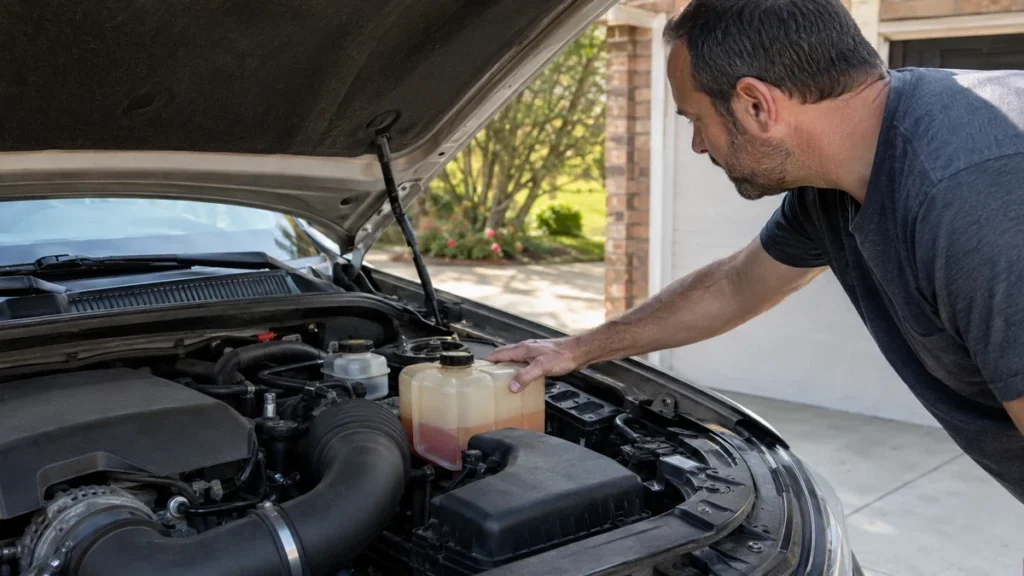
Engines generate significant heat.
The cooling system controls that temperature through components such as:
- Coolant
- Radiator
- Water pump
- Thermostat
- Cooling fans
- Hoses
- Coolant reservoir
A healthy cooling system should not require constant topping up.
Repeated coolant loss needs to be investigated.
Signs of a Cooling-System Problem
Watch for:
- Temperature gauge rising above normal
- Coolant warning light
- Steam from under the hood
- Sweet smell
- Visible coolant beneath the vehicle
- Repeatedly low coolant
- Damaged or leaking hoses
A small hose, clamp, reservoir, or seal problem may be easier and cheaper to address before the engine overheats.
Never Open a Hot Cooling System
Pressurized hot coolant can cause serious burns.
Allow the engine to cool and follow the manufacturer’s instructions before opening a coolant reservoir or radiator cap where applicable.
Use the coolant specification required for your vehicle. Fluids that look similar are not necessarily interchangeable.
7. Check the Other Essential Fluids
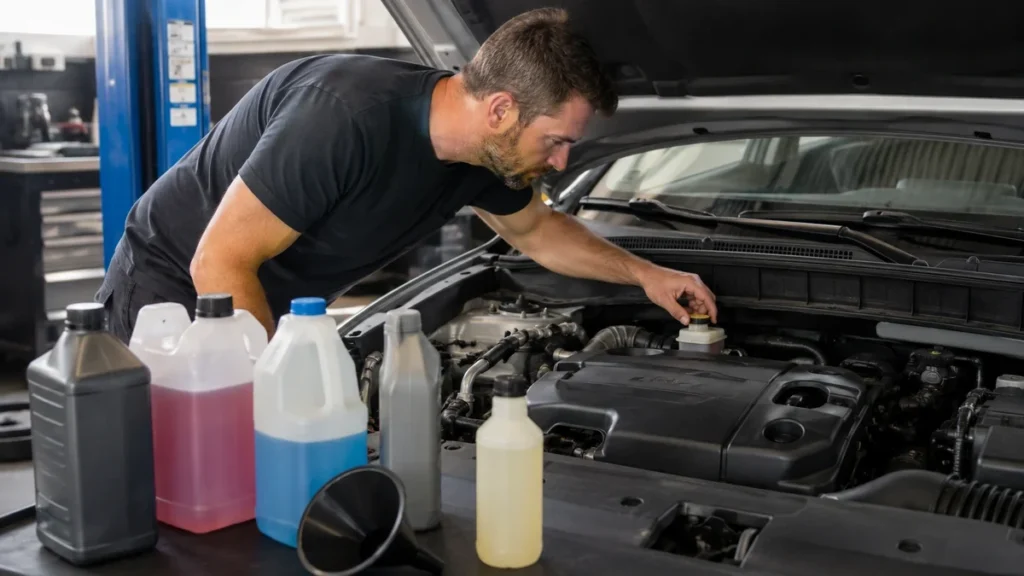
Engine oil and coolant get most of the attention, but they are not the only fluids a vehicle may depend on.
Depending on the vehicle, you may also need to monitor:
Brake Fluid
Brake fluid transfers hydraulic pressure through the braking system.
A low level can be related to brake-pad wear, but it may also indicate a leak.
Do not repeatedly top up a low reservoir without determining why the level is dropping.
Transmission Fluid
Automatic transmissions vary significantly.
Some have a conventional dipstick. Others require a specific checking procedure, operating temperature, or workshop equipment.
Use only the fluid and service procedure specified for your transmission.
Power-Steering Fluid
Many newer vehicles use electric power steering and therefore have no conventional power-steering-fluid reservoir.
Do not assume every fluid listed in an old maintenance checklist applies to your car.
Windshield Washer Fluid
Washer fluid is inexpensive but important for visibility, particularly in areas with snow, salt, dust, mud, or heavy insect activity.
8. Inspect the Battery and Charging System
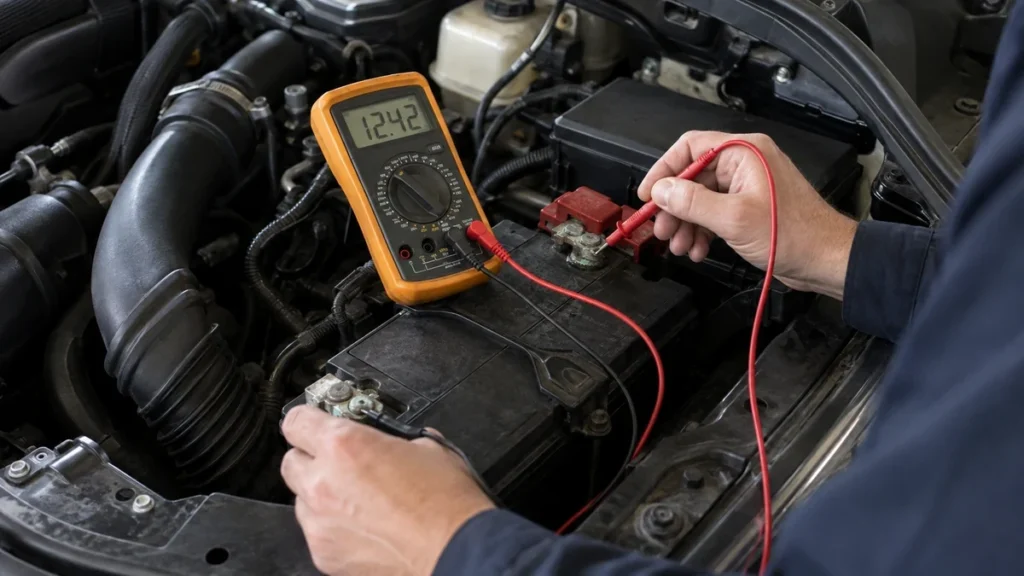
A weak battery often becomes obvious during extreme heat or cold, but age is only one factor in battery problems.
Inspect accessible battery terminals for corrosion and make sure the connections are secure.
Watch for:
- Slow engine cranking
- Clicking during startup
- Repeated jump-starts
- Dim lights
- Electrical problems
- Battery or charging-system warning light
A Dead Battery Does Not Always Mean a Bad Battery
The starting and charging systems include more than the battery.
Depending on the vehicle, the underlying problem may involve:
- Alternator
- Starter motor
- Battery cables
- Ground connections
- Wiring
- Fuses
- Electronic charging controls
If a relatively new battery repeatedly goes flat, have the charging system tested before simply buying another battery.
Good diagnosis often saves more money than replacing parts by guesswork.
9. Replace Dirty Engine and Cabin Air Filters
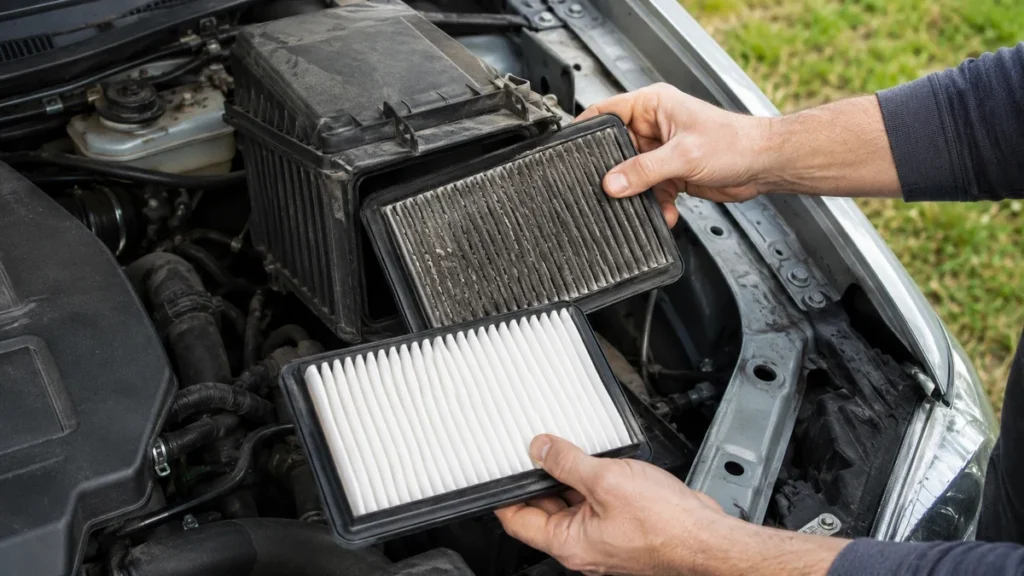
The engine air filter and cabin air filter perform completely different jobs.
Engine Air Filter
The engine air filter helps prevent dust and debris from entering the intake system.
Cars driven on dusty or unpaved roads may require more frequent inspections.
Replace the filter according to the vehicle’s maintenance schedule and make sure it fits and seals correctly.
A poorly fitting filter can allow unfiltered air to bypass the filter media.
Cabin Air Filter
The cabin air filter cleans air entering the passenger compartment through the heating and air-conditioning system.
A dirty cabin filter can contribute to:
- Reduced HVAC airflow
- Increased dust
- Musty odors
- Poor heating or air-conditioning performance
Replacement frequency varies between vehicles and operating environments.
10. Service Spark Plugs and Ignition Components on Schedule
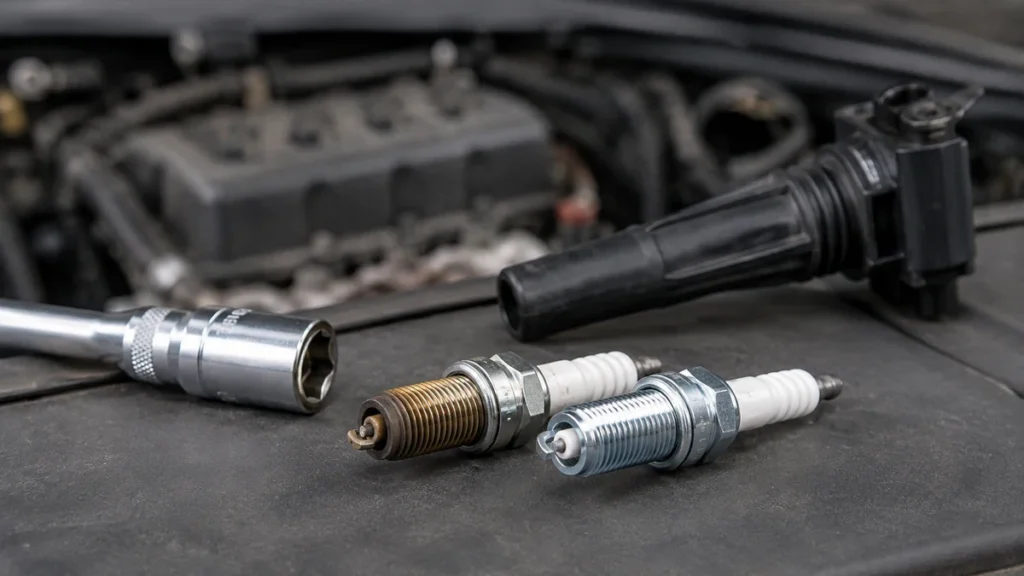
Gasoline engines depend on ignition components to burn the air-fuel mixture correctly.
Modern spark plugs often last many thousands of miles, but they remain wear items on most gasoline engines.
Possible symptoms of ignition trouble include:
- Rough idle
- Hesitation
- Engine misfires
- Difficult starting
- Poor acceleration
- Increased fuel consumption
- Check Engine Light
The ignition system may also include coils, coil boots, wiring, and electronic controls.
Diagnose Before Replacing Parts
A misfire does not automatically mean the spark plug is faulty.
Modern OBD-II diagnostics can provide useful fault information, but a diagnostic trouble code should be treated as a clue rather than proof that the component named in the code has failed.
Wiring problems, vacuum leaks, injector faults, mechanical issues, or damaged connectors can sometimes produce similar symptoms.
Replacing parts without diagnosis can become expensive very quickly.
11. Inspect Belts, Hoses, and Timing Components
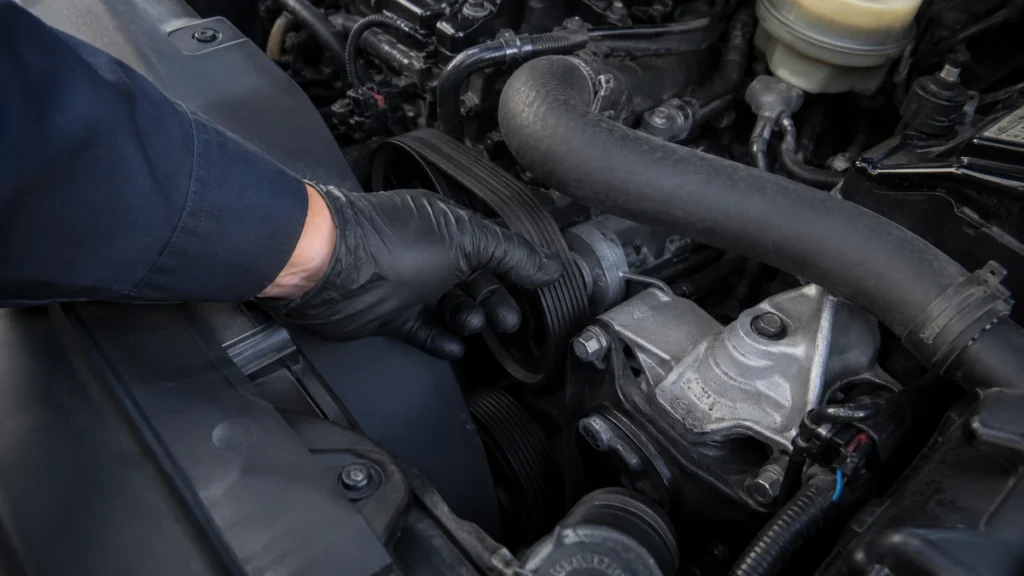
Belts and hoses operate in a difficult environment.
They are exposed to:
- Engine heat
- Vibration
- Pressure
- Chemicals
- Repeated temperature changes
Inspect accessible components for:
- Cracks
- Fraying
- Glazing
- Swelling
- Soft spots
- Leaks
- Missing belt material
A relatively inexpensive hose can lead to major problems if it ruptures and causes coolant loss.
A failed serpentine belt can also disable several accessories, depending on engine design.
Know Whether Your Engine Uses a Timing Belt or Chain
Timing belts and timing chains should not be treated as the same component.
Some timing belts have specific replacement intervals. Ignoring those intervals can result in serious engine damage on certain engines.
Timing chains often last much longer, but chains, guides, tensioners, and lubrication systems can still develop problems.
If you buy a used vehicle with incomplete service records, confirming previous timing-belt replacement can be particularly important when the engine uses one.
12. Maintain Wipers, Windshield, and Exterior Lights
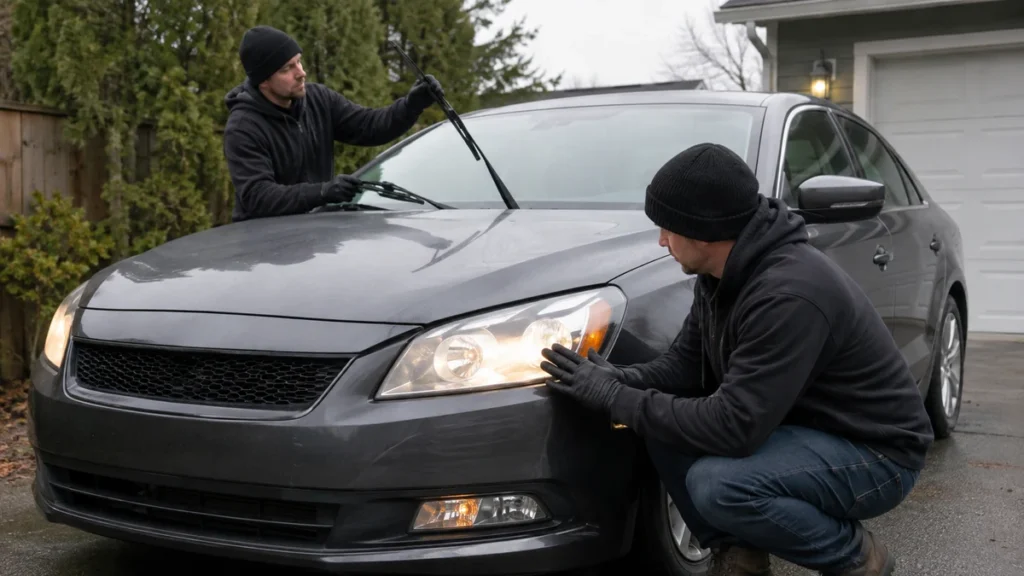
Car maintenance is also about visibility.
Replace wiper blades when they:
- Streak
- Smear
- Chatter
- Skip
- Leave parts of the windshield uncleared
Keep washer fluid available and address windshield damage that interferes with the driver’s view.
Exterior lights should also be checked periodically.
Inspect:
- Low-beam headlights
- High beams
- Brake lights
- Tail lights
- Turn signals
- Hazard lights
- Reverse lights
- Fog lights where equipped
- License-plate lights where required
A failed bulb may be a simple maintenance issue.
Repeated failures can indicate a problem involving the socket, wiring, moisture intrusion, fuses, or electrical controls.
13. Never Ignore Important Dashboard Warning Lights

Modern vehicles monitor many systems continuously.
A dashboard warning means something deserves attention.
Important examples include:
- Check Engine Light
- Oil-pressure warning
- Coolant-temperature warning
- Battery or charging-system warning
- Brake warning
- ABS warning
- TPMS warning
Not every warning has the same urgency.
A maintenance reminder may allow you to schedule service.
A serious oil-pressure or overheating warning may require immediate action.
Use OBD-II Codes Correctly
An OBD-II scanner can retrieve diagnostic trouble codes from many vehicle systems.
The code helps narrow down the problem.
It does not automatically tell you which part to replace.
This matters particularly for owners who buy replacement parts themselves.
Diagnose the fault first whenever possible. Order the part second.
14. Pay Attention to Leaks, Sounds, Smells, and Handling Changes
One of the best diagnostic tools costs nothing: familiarity with how your vehicle normally behaves.
Look underneath the vehicle occasionally.
Potential leaks include:
- Engine oil
- Coolant
- Transmission fluid
- Brake fluid
- Gear oil
- Washer fluid
Clear water beneath the passenger area after using the air conditioner can be normal condensation.
Unexplained oily or colored fluid should be investigated.
Listen for Changes
New sounds such as grinding, clunking, rattling, humming, knocking, or clicking can provide an early warning.
A clicking noise while turning may have a different cause from a clunk over bumps, so the location and driving conditions matter.
Notice Changes in Handling
Possible signs of steering or suspension wear include:
- Uneven tire wear
- Excessive bouncing
- Steering looseness
- Pulling
- Vibration
- Changes in steering response
Components that may require inspection include:
- Shocks
- Struts
- Ball joints
- Bushings
- Tie-rod ends
- Wheel bearings
- CV joints
- CV boots
These problems often develop gradually, which is why drivers sometimes become accustomed to them.
15. Use the Correct Replacement Parts and Keep Maintenance Records
One of the easiest ways to waste money on vehicle maintenance is to install the wrong part.
Never rely on model name alone when fitment varies.
Confirm details such as:
- Make
- Model
- Model year
- Engine
- Trim where relevant
- Transmission where relevant
- Drivetrain
- Manufacturer specification
- Part number or confirmed interchange
This is particularly important with Ford vehicles because one model may be available with several engines and drivetrain combinations.
A part listed for a Ford F-150, Explorer, Escape, Mustang, Bronco, or Super Duty does not automatically fit every version of that model.
Correct Fitment Matters
Pay close attention when buying:
- Oil filters
- Air filters
- Spark plugs
- Ignition coils
- Belts
- Sensors
- Brake components
- Cooling-system parts
The lowest-priced part is not a bargain if it does not fit correctly, creates another problem, or fails prematurely.
Keep Maintenance Records
Record:
- Date
- Mileage
- Work performed
- Fluids used
- Replacement parts
- Part numbers
- Repair shop
- Receipts
- Next service due
Maintenance history becomes increasingly valuable as a vehicle ages.
It can prevent duplicate work, help diagnose recurring problems, support warranty documentation, and give a future buyer a clearer picture of how the vehicle was cared for.
Car Maintenance Checklist by Mileage
Mileage can help organize maintenance, but it should never replace your vehicle’s official service schedule.
Around 5,000 to 10,000 Miles
Depending on manufacturer requirements, this range may involve checking whether the following are due:
- Engine oil and filter
- Tire rotation
- Tire inspection
- Brake inspection
- Fluid checks
- General vehicle inspection
Do not assume the oil must be changed at a specific point in this range. Follow the vehicle’s maintenance schedule or oil-life monitoring system.
Around 30,000 Miles
Review the maintenance schedule for items such as:
- Engine air filter
- Cabin air filter
- Brakes
- Tires
- Battery
- Fluids
- Belts
- Suspension
Some vehicles will require certain services at this mileage while others will not.
Around 60,000 Miles
Vehicle-specific schedules may call for closer attention to:
- Spark plugs
- Cooling-system components
- Fluids
- Steering
- Suspension
- Transmission or drivetrain components
- Belts and hoses
Again, actual requirements vary.
Around 100,000 Miles
The 100,000-mile mark is a useful time to review the vehicle’s complete maintenance history.
Depending on its design and previous service, areas worth inspecting can include:
- Spark plugs
- Timing components
- Coolant
- Transmission service requirements
- Belts
- Hoses
- Suspension
- Wheel bearings
- CV boots
- Engine or transmission mounts
- Fluid leaks
Mileage alone is not a reason to replace every component.
Inspect first and follow the manufacturer’s schedule.
What Changes After 100,000 Miles?
A well-maintained car does not suddenly become unreliable when the odometer passes 100,000 miles.
Service history often matters more than the number alone.
Older vehicles deserve closer attention to:
- Oil consumption
- Fluid leaks
- Cooling-system health
- Rubber components
- Suspension wear
- Corrosion
- Previous maintenance records
A 130,000-mile vehicle with consistent maintenance can be in better mechanical condition than a lower-mileage car that has been neglected.
Age also matters.
Belts, hoses, seals, batteries, and tires can deteriorate even if a car is driven very little.
DIY Maintenance vs. Calling a Mechanic
Simple inspections are within reach of most car owners.
Many drivers can safely:
- Check tire pressure
- Inspect tire tread
- Check engine oil
- Top up washer fluid
- Check exterior lights
- Replace wiper blades
Engine and cabin air-filter replacement can also be straightforward on many vehicles.
Oil changes and battery replacement require more tools and knowledge but may still be reasonable DIY jobs for experienced owners.
Brakes, suspension, timing systems, major transmission work, complex diagnostics, and high-voltage hybrid or EV systems require considerably more caution.
Knowing when a repair exceeds your tools or experience is part of responsible vehicle maintenance.
How Driving Conditions Affect Maintenance
Two vehicles with identical mileage may experience very different levels of wear.
Maintenance needs can change with:
- Frequent towing
- Heavy loads
- Long periods of idling
- Repeated short journeys
- Stop-and-go traffic
- Dusty environments
- Off-road driving
- Extreme heat
- Freezing conditions
Manufacturers may classify some of these conditions as severe or special operating conditions.
If that applies to your vehicle, follow the relevant maintenance schedule.
Summer Car Maintenance
Hot weather can place additional stress on the cooling system, battery, tires, belts, hoses, and air-conditioning system.
Before sustained hot-weather driving, inspect:
- Coolant
- Cooling-system hoses
- Serpentine belt
- Tire condition
- Tire pressure
- Battery health
- Engine oil
- Wipers
A cooling system that appears adequate in mild weather may expose weaknesses once temperatures rise.
Winter Car Maintenance
Cold-weather preparation should include:
- Battery health
- Coolant or antifreeze protection
- Tire condition
- Tire pressure
- Suitable winter tires where needed
- Washer fluid
- Wipers
- Defroster
- Exterior lights
- Spare tire
Drivers in areas where road salt is common should also pay attention to corrosion.
Regular underbody cleaning and inspection of brake lines, suspension mounting areas, subframes, rocker panels, and wheel arches can help identify rust before it becomes severe.
Check for Safety Recalls
Routine maintenance should include one important check that requires no tools.
U.S. drivers can search for unrepaired vehicle safety recalls using the vehicle’s 17-character VIN through NHTSA’s recall database. NHTSA states that qualifying safety recall repairs are generally completed free of charge. Check your vehicle for open NHTSA recalls
A recall check is especially useful when:
- Buying a used vehicle
- The previous service history is incomplete
- The vehicle has changed owners
- You may have missed a manufacturer notice
Do not assume every previous owner completed all recall work.
Common Car Maintenance Mistakes That Can Lead to Bigger Bills
Several habits repeatedly create unnecessary repair costs.
One is applying the same maintenance interval to every vehicle.
Another is inflating tires according to the maximum pressure printed on the tire sidewall instead of the vehicle manufacturer’s recommended pressure.
Other common mistakes include:
- Ignoring small leaks
- Driving on grinding brakes
- Mixing fluids without confirming compatibility
- Buying parts based only on model name
- Replacing components only because they appear in an OBD-II code
- Ignoring repeated coolant loss
- Forgetting to check the spare tire
- Discarding maintenance records
Good maintenance depends on inspection and diagnosis, not guesswork.
Frequently Asked Questions
What Are the Most Important Car Maintenance Items?
Engine oil, tires, brakes, coolant, required fluids, battery condition, filters, belts, lights, and safety-related warning systems deserve regular attention.
Your vehicle’s manufacturer schedule determines the exact service requirements.
What Should I Check on My Car Every Month?
At minimum, inspect tire pressure and condition, engine oil level where owner-checkable, coolant level when the system is cold, exterior lights, washer fluid, wipers, visible leaks, and dashboard warning lights.
Check the spare tire as well if your vehicle has one.
How Often Should I Change Engine Oil?
Follow the interval or oil-life monitoring system specified by the vehicle manufacturer.
Engine type, oil specification, operating conditions, mileage, time, towing, and climate can all influence the correct interval.
Is the 3,000-Mile Oil-Change Rule Still Necessary?
Not universally.
Modern engines, oils, and oil-life systems vary considerably. The vehicle-specific manufacturer recommendation should determine when the oil is changed.
How Often Should Tire Pressure Be Checked?
NHTSA recommends checking tire pressure at least once a month while the tires are cold.
Check the spare tire as well when your vehicle has one.
What Maintenance Can a Beginner Do?
Many beginners can safely check tire pressure and tread, inspect fluids where the manufacturer provides an owner-checking procedure, check lights, top up washer fluid, and replace wiper blades.
Filters are also straightforward to replace on many vehicles.
When Should I Stop Driving and Call a Mechanic?
Serious loss of braking ability, an oil-pressure warning, significant overheating, heavy fluid loss, severe steering problems, or another condition that makes the vehicle unsafe deserves immediate attention rather than continued driving.
What Maintenance Is Needed After 100,000 Miles?
There is no universal 100,000-mile service package.
Review the manufacturer’s schedule and maintenance history. Spark plugs, cooling-system components, belts, hoses, fluids, timing components where applicable, suspension, wheel bearings, CV boots, and leaks are among the areas that may deserve inspection.
Do Electric Cars Need Maintenance?
Yes.
EVs eliminate traditional engine-oil changes and several combustion-engine components, but tires, brakes, suspension, steering, filters, thermal-management systems, wipers, and electrical systems still require maintenance.
Does Preventive Maintenance Guarantee That My Car Will Not Break Down?
No.
Mechanical and electrical components can still fail unexpectedly. Preventive maintenance reduces avoidable failures and increases the chance of detecting wear or deterioration before it causes additional damage.
Final Thoughts
The best car maintenance routine is not the one with the longest checklist.
It is the one you actually follow.
Use your owner’s manual as the foundation. Check engine oil, tires, brakes, coolant, battery condition, filters, belts, hoses, fluids, lights, and warning systems at the appropriate intervals.
Pay attention whenever your vehicle develops a new leak, smell, sound, vibration, or change in handling.
When a replacement part is needed, confirm exact fitment before installing it.
When a repair involves a safety-critical system or exceeds your experience, use a qualified technician.
These 15 essential car maintenance tips cannot prevent every mechanical failure, but they can help you catch many problems earlier, reduce avoidable damage, and keep your vehicle safer and more dependable over the long term.