In a Brand Name Normalization Rules landscape where data accuracy can influence contractual obligations, intellectual property protection, and compliance exposure, brand name normalization is no longer just a technical concern—it is a legal necessity.
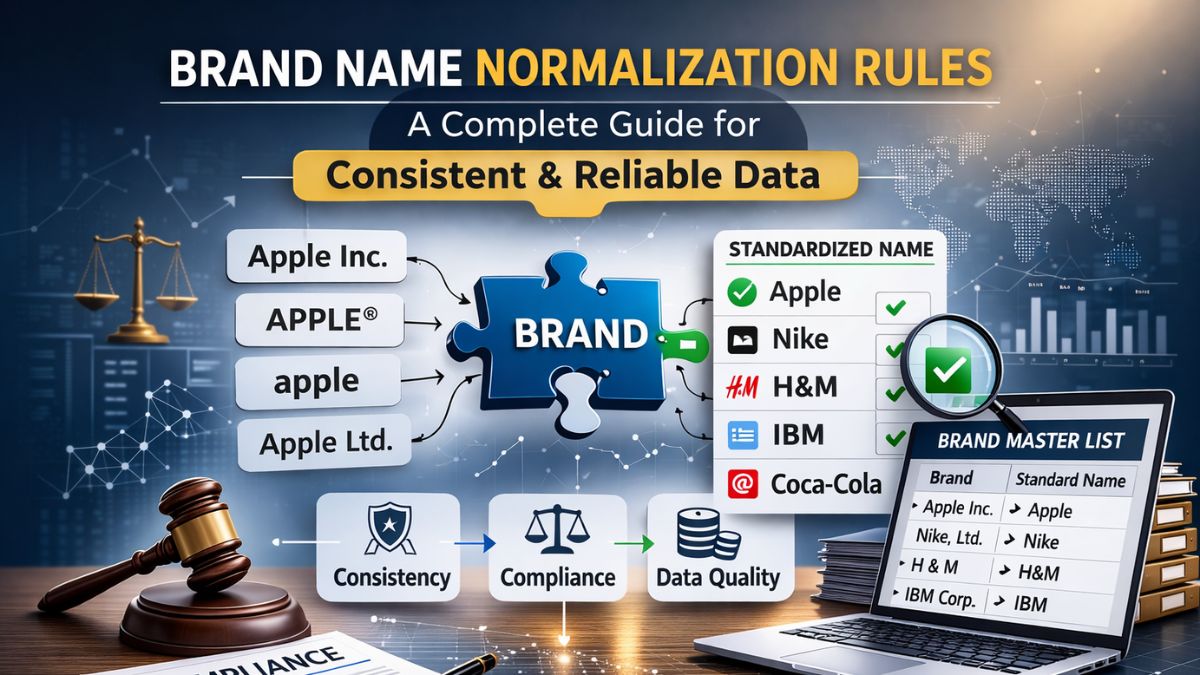
Across e-commerce platforms, CRM systems, procurement databases, and advertising networks, brand names appear in multiple formats. Variations such as Apple Inc., APPLE, or Apple® may refer to the same entity. Without standardized rules, these inconsistencies can affect reporting accuracy, trademark enforcement, contractual clarity, and even evidentiary reliability in disputes.
For legal professionals and compliance officers, brand name normalization represents a governance mechanism that strengthens data integrity, reduces risk, and enhances organizational accountability.
Understanding Brand Name Normalization Rules in Legal Terms
What Is Brand Name Normalization?
Brand name normalization refers to the structured process of standardizing how brand names are recorded, stored, and displayed across systems. From a legal perspective, it operates as a data governance protocol that ensures consistent representation of brand identifiers.
Normalization establishes:
-
A single authoritative version of each brand name
-
Clear formatting standards
-
Defined treatment of legal suffixes, trademarks, and abbreviations
-
Cross-system consistency
In effect, it minimizes ambiguity in commercial documentation and digital records.
Why Inconsistencies Present Legal Risk
Brand name inconsistencies are rarely intentional. They often result from:
-
Manual data entry errors
-
Regional naming variations
-
Abbreviations or informal shorthand
-
Inclusion or omission of legal suffixes
-
Variations in capitalization or punctuation
However, these discrepancies can produce legal consequences, including:
-
Misattribution of revenue or liability
-
Confusion in contractual counterparties
-
Trademark misuse or dilution concerns
-
Complications in audit trails
-
Evidentiary inconsistencies during litigation
In regulated industries, inconsistent naming can also undermine compliance reporting and internal controls.
Legal Significance of Brand Name Normalization
1. Strengthening Data Integrity
Accurate and consistent brand data supports reliable recordkeeping, which is critical in regulatory audits, financial disclosures, and contractual documentation. Normalization reduces duplicate entries and prevents fragmented reporting.
2. Supporting Intellectual Property Protection
The correct and consistent use of trademarks is fundamental to IP enforcement. While symbols such as ® and ™ may be excluded from operational databases, legal systems must retain the capacity to reference the correct trademarked entity.
For example, entities such as Apple Inc. and International Business Machines Corporation (commonly known as IBM) illustrate how capitalization, abbreviations, and formal corporate names differ across contexts. Legal teams must ensure that normalization practices do not undermine trademark rights or misidentify corporate entities.
3. Enhancing Contractual Clarity
In procurement and supply chain agreements, a normalized master brand list reduces ambiguity. Standardized naming ensures that contractual parties are properly identified, preventing disputes rooted in mislabeling or inconsistent terminology.
4. Ensuring Regulatory Compliance
Regulators increasingly emphasize data accuracy and transparency. Clean, normalized brand data supports compliance in:
-
Financial reporting
-
Advertising disclosures
-
Anti-counterfeiting measures
-
Consumer protection obligations
Core Legal Principles of Brand Name Normalization
Consistency as a Governance Standard
A single authoritative brand format should be adopted and consistently applied across operational systems. This principle strengthens audit defensibility and reduces interpretative risk.
Distinguishing Legal and Operational Contexts
Legal documentation may require full corporate names and trademark symbols, while operational systems may use simplified forms. Normalization frameworks should clearly distinguish between these contexts.
Alignment with Consumer Recognition
Normalization should reflect how consumers identify a brand in the marketplace. For example, brands such as Nike, Inc. are commonly recognized simply as Nike. Operational systems may standardize the public-facing name while retaining formal legal identifiers in corporate records.
Common Brand Name Normalization Rules
Standardized Capitalization
Organizations typically adopt a consistent capitalization format:
-
Title Case (e.g., Nike Air)
-
Uppercase for acronyms (e.g., IBM)
-
Standard brand stylization where legally appropriate
Consistency reduces ambiguity in search and reporting systems.
Removal of Legal Suffixes in Operational Systems
Suffixes such as Inc., Ltd., LLC, or PLC are often removed from operational datasets unless legally required. However, legal databases should maintain complete corporate designations.
Handling Trademark Symbols
Symbols such as ®, ™, and © are typically excluded from internal analytics and search systems but preserved in legal documentation where required to maintain trademark rights.
Managing Punctuation and Special Characters
Brand Name Normalization Rules policies define the treatment of:
-
Ampersands versus “and.”
-
Hyphenation
-
Periods and commas
For instance, variations of brands like H&M may appear differently across systems. A defined standard prevents duplication and misclassification.
Addressing Abbreviations
Abbreviations such as IBM must be consistently applied and linked to the full legal entity in corporate records to avoid confusion.
Industry-Specific Legal Considerations
E-Commerce and Retail
Normalized brand names prevent duplicate listings, reduce counterfeit risks, and improve compliance with marketplace regulations.
Marketing and Advertising Law
Advertising attribution depends on clean brand data. Misattribution of campaign performance could raise disclosure or reporting issues.
Data Warehousing and Business Intelligence
In litigation or regulatory inquiries, reliable aggregation of sales or performance data depends on consistent brand naming conventions.
Supply Chain and Procurement
Clear and standardized brand references minimize confusion in vendor agreements and cross-border trade documentation.
Implementation Challenges
Legacy Data Remediation
Historical records may contain extensive inconsistencies. Retrospective normalization requires structured review and legal oversight to preserve evidentiary integrity.
Brand Evolution and Rebranding
Mergers, acquisitions, and rebranding initiatives require updated normalization rules while maintaining historical continuity.
Human Input Variability
Manual entry remains a primary source of inconsistency. Legal and compliance teams should collaborate with IT departments to reduce discretionary variations.
Best Practices from a Governance Perspective
Establish a Master Brand Registry
A centralized and legally vetted brand list should serve as the authoritative reference across systems.
Document Policies and Procedures
Written normalization guidelines should be integrated into broader data governance frameworks.
Automate Controls
Where possible, automated validation rules should apply normalization standards at the point of data entry.
Conduct Periodic Audits
Regular audits ensure ongoing compliance and identify emerging inconsistencies.
Cross-Departmental Alignment
Legal, IT, marketing, and operations must coordinate to ensure uniform application of brand standards.
The Strategic and Legal Future of Brand Data
As data-driven decision-making expands, normalization frameworks will increasingly intersect with privacy law, cybersecurity regulation, and cross-border data governance.
Machine learning tools can assist in identifying naming variations, but human legal oversight remains essential to safeguard trademark integrity and contractual accuracy.
In complex digital ecosystems, standardized brand data is not merely a technical asset—it is a component of risk management and legal resilience.
Conclusion
Brand name normalization rules provide more than operational convenience. For law-focused professionals, they form part of a broader compliance architecture that supports:
-
Accurate reporting
-
Intellectual property protection
-
Contractual precision
-
Regulatory readiness
Implementing a structured normalization framework requires coordination and oversight, but the legal and strategic advantages are substantial. In an era defined by digital records and regulatory scrutiny, consistency in brand naming is not optional—it is foundational to institutional credibility and compliance integrity.