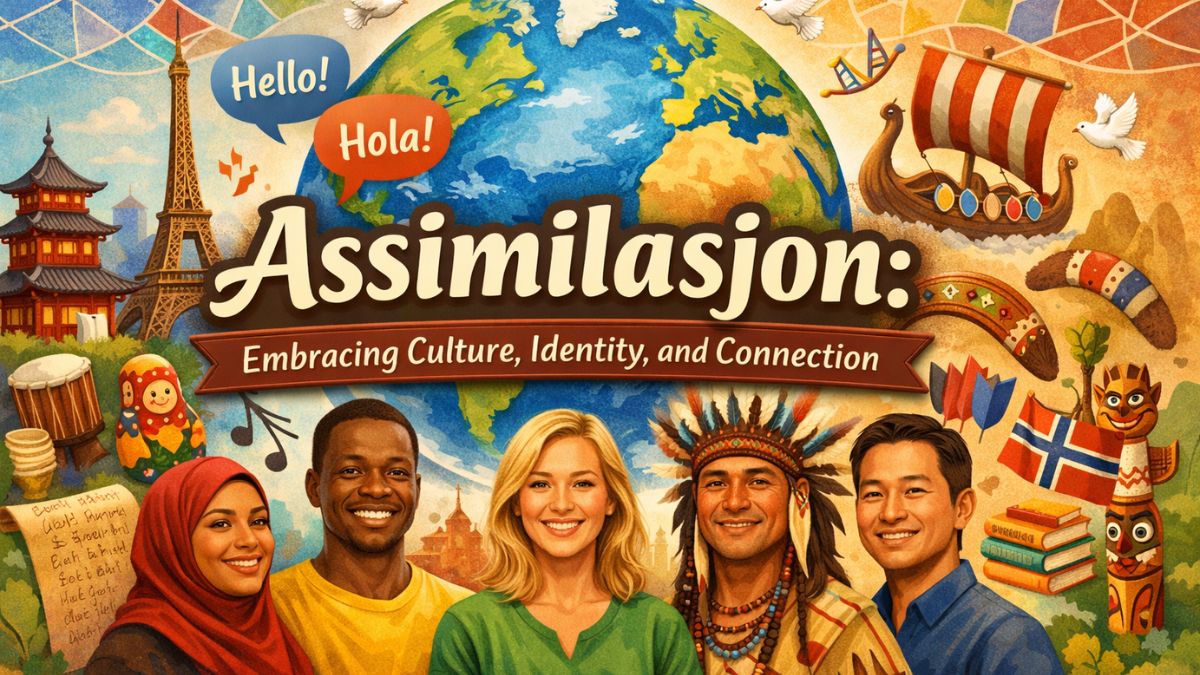
Assimilasjon is a nuanced and often misunderstood concept that profoundly shapes societies. At its core, it refers to the process by which individuals or groups adopt the culture, language, and social norms of another group—typically the more dominant one. This transformation can influence personal identity, community cohesion, and cultural preservation in far-reaching ways.
In today’s globalized world, understanding assimilasjon is more important than ever. Migration patterns are evolving, multicultural communities are expanding, and cross-cultural interactions are becoming a daily reality. The implications of assimilation extend beyond simple cultural acceptance—they touch on issues of belonging, social power dynamics, and societal harmony.
Let’s dive deeper into what assimilasjon truly entails, its stages, examples, challenges, and future possibilities.
🔄 The Process of Assimilation
Assimilasjon is rarely instantaneous; it unfolds through multiple stages:
1. Exposure to a New Culture
The first step occurs when individuals encounter a culture different from their own. This exposure can come through migration, education, work, or media. Individuals face new norms, values, languages, and practices, often challenging long-held beliefs.
2. Adaptation and Integration
As exposure continues, people begin to adapt. Learning the dominant language, understanding social cues, and following new behavioral norms are critical steps. This phase can be both exciting and overwhelming, as individuals navigate the delicate balance between old and new cultural identities.
3. Interaction and Relationship Building
Meaningful interactions with members of the dominant culture help bridge gaps. Friendships, mentorships, and community engagement foster acceptance and understanding, smoothing the assimilation process.
4. Internal Conflict and Negotiation
Not everyone experiences assimilation the same way. Some fully embrace the new identity, while others struggle to balance multiple cultural influences. Tensions often arise between preserving one’s heritage and conforming to mainstream expectations. This emotional complexity is a defining feature of the assimilation experience.
🏛️ Cultural and Social Implications
Assimilasjon carries both visible and subtle consequences for individuals and communities:
Cultural Impact
Adopting a dominant culture often requires individuals to compromise certain aspects of their heritage. Over time, this can reduce cultural diversity and erode unique traditions, languages, and practices.
Community Tensions
When traditional practices clash with mainstream values, communities may experience friction. The pressure to conform can generate feelings of alienation, particularly among those who resist change.
Social Relationships
Assimilation influences how people relate across cultures. It can foster collaboration, understanding, and shared values. Conversely, it can also create mistrust, resentment, or feelings of exclusion.
Education and Workplaces
In schools and workplaces, assimilation shapes communication, etiquette, and behavioral norms. Inclusive strategies are essential to respect individual heritage while ensuring smooth integration and cohesion.
🌟 Examples of Successful and Unsuccessful Assimilation
✅ Successful Assimilation
Some communities successfully integrate while maintaining key aspects of their cultural identity:
-
Jewish Immigrants in the U.S. – They became an integral part of American society, contributing to the arts, sciences, and business while preserving cultural traditions.
-
Indian Diaspora in the UK – Many maintain cultural festivals, cuisine, and languages while thriving in professional and educational spaces.
❌ Unsuccessful Assimilation
Failure to integrate often results in cultural loss, social tension, and marginalization:
-
Indigenous Australians – Forced assimilation policies led to the erosion of traditional practices and languages.
-
Roma Communities in Europe – Persistent social exclusion and discrimination hindered integration efforts.
These examples highlight how government policies, community support, and historical context influence assimilation outcomes.
⚠️ Challenges and Criticisms
Assimilation is not without controversy. Several challenges emerge:
Cultural Erosion
Minority traditions and languages risk fading under dominant cultural pressures, diminishing the richness of society.
Social Inequality
Assimilation often favors dominant groups, creating power imbalances and disadvantaging marginalized communities.
Psychological Strain
Balancing dual identities can lead to stress, confusion, and identity crises for individuals navigating multiple cultural worlds.
Forced Assimilation
Pressure to conform may breed resentment and social division instead of fostering understanding.
Loss of Diversity
Overemphasis on assimilation risks creating homogenized societies that undervalue cultural pluralism.
🎓 The Role of Education
Education is a cornerstone of successful assimilasjon:
-
Promoting Shared Language and Values – Schools teach the dominant language and social norms, helping students navigate new cultural landscapes.
-
Inclusive Curricula – reflecting diverse histories and perspectives – foster understanding and respect.
-
Cultural Competency Training – Educators trained in cross-cultural communication can better support students.
-
Community Engagement – Involving families and local communities strengthens students’ sense of belonging.
Inclusive educational systems help create spaces where cultural differences are celebrated, not suppressed.
💡 Modern Factors Shaping Assimilation
Assimilation today is influenced by:
-
Globalization – Increased migration and cross-cultural exchange create more complex assimilation experiences.
-
Technology & Social Media – Digital platforms enable the maintenance of cultural identity while integrating into dominant cultures.
-
Youth Attitudes – Younger generations tend to value multiculturalism, promoting coexistence rather than strict conformity.
-
Policy & Governance – Inclusive policies encourage integration without erasing cultural identities.
🔮 Future Possibilities for Assimilation
The landscape of assimilasjon is evolving:
-
A Mosaic, Not a Melting Pot – Societies may embrace multiple identities, creating a tapestry of cultures rather than forcing uniformity.
-
Empathy & Intercultural Competence – Early education in empathy and global awareness will shape more harmonious communities.
-
Policy Evolution – Governments may focus on inclusion, multicultural collaboration, and equity over forced conformity.
-
Digital Integration – Online communities provide spaces to preserve cultural heritage while engaging globally.
The future promises richer, more inclusive societies where differences are celebrated rather than suppressed.
🌈 Conclusion
Assimilasjon is a powerful process shaping identities, communities, and generations. While some successfully integrate into dominant cultures, others face challenges that can lead to tension and cultural loss.
Education, policy, and open-minded communities are key to meaningful assimilation. Respecting diversity while embracing shared cultural norms allows societies to build stronger, inclusive, and harmonious environments.
By understanding the complexities of assimilation, we can foster dialogue, empathy, and cross-cultural collaboration—ensuring that every individual has the opportunity to thrive without losing their unique identity.