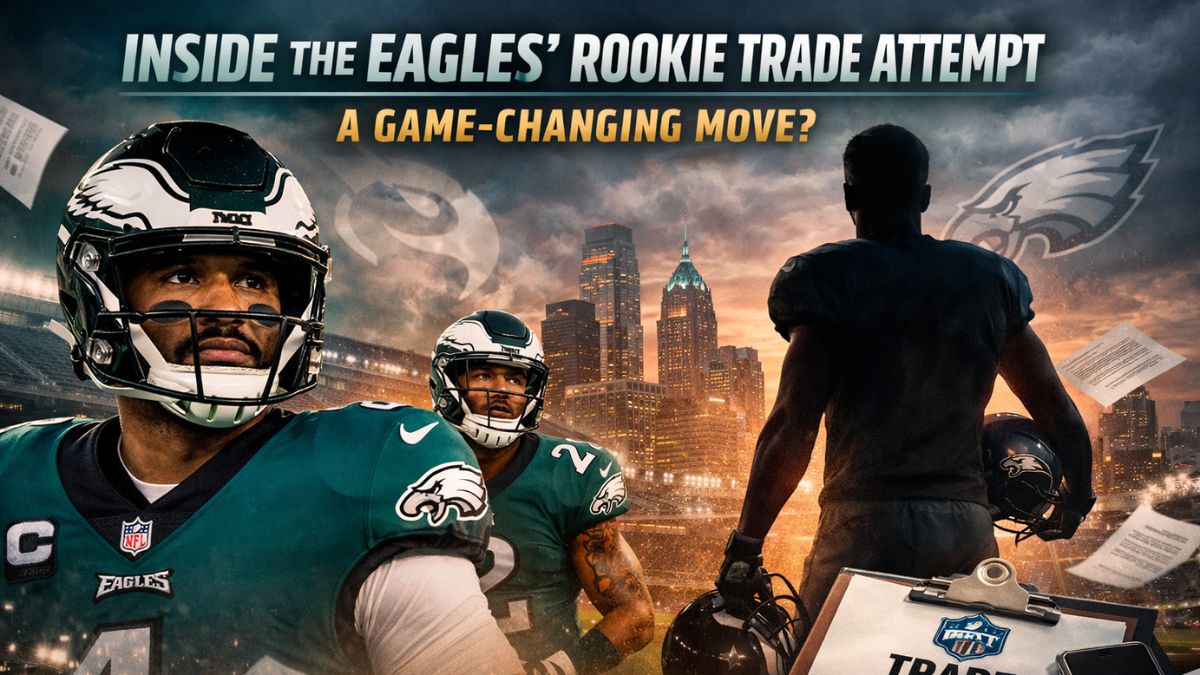
The Eagles Rookie Trade Attempt have never been a franchise that plays it safe. From aggressive draft-day maneuvers to midseason roster gambles, this organization has built its identity on calculated risk. So when reports surfaced of a bold rookie trade attempt, it immediately sent shockwaves through Eagles Nation.
At a moment when the season felt delicately balanced—equal parts promise and uncertainty—the front office explored a move that could have altered the team’s short- and long-term trajectory. The question wasn’t just who the Eagles targeted, but why they were willing to push so hard. Was this the missing piece? Or a risk too costly to finalize?
Let’s step inside the decision-making room and unpack what this move meant—and what it still might mean—for the future of the franchise.
A Roster at the Crossroads: Eagles Rookie Trade Attempt
The Eagles’ current roster tells a story of transition layered with ambition. Veterans with playoff scars line up next to young players still defining their NFL identities.
At quarterback, Jalen Hurts remains the engine of the offense. His leadership, mobility, and growth as a passer have given Philadelphia a legitimate foundation. But football, especially in the NFC, is never about one position alone.
Defensively, leaders like Darius Slay anchor a unit that has improved but still struggles against elite passing attacks. The secondary, while talented, has shown flashes of vulnerability in high-pressure moments.
This mix of proven leadership and unfinished potential created urgency. The Eagles weren’t desperate—but they were aware that the window to contend doesn’t stay open forever.
The Rookie Who Caught Philadelphia’s Eye
The target of the trade attempt was a rookie already turning heads across the league. Explosive, instinctive, and adaptable, he represented the kind of player who doesn’t just fill a role—he changes how opponents prepare.
What made him especially attractive to Philadelphia was his versatility. Whether lining up in multiple offensive looks or contributing immediately on special teams, his skill set offered flexibility that modern NFL offenses crave.
To the coaching staff, this wasn’t about adding depth. It was about unlocking new schemes, mismatches, and momentum. The belief was simple: plug this player into the system, and the ripple effects would be felt every Sunday.
Why the Deal Nearly Fell Apart
As compelling as the vision was, the road to completion proved complicated.
Other teams entered the picture quickly, driving up the asking price. Suddenly, the Eagles weren’t just negotiating—they were competing.
Philadelphia’s front office faced a familiar dilemma:
How much future capital are you willing to sacrifice for immediate impact?
Draft picks, long-term flexibility, and salary cap implications all came under scrutiny. The rookie’s contract structure added another layer of complexity, forcing the team to weigh financial consequences beyond the current season.
Behind closed doors, coaches debated fit, timing, and chemistry. Could this player be integrated quickly enough to justify the cost? Or would patience serve the team better?
In the end, caution met ambition—and the deal stalled.
What Could Have Changed on the Field
Had the trade gone through, the impact might have been immediate.
Offensively, the Eagles could have introduced new formations and tempo changes, forcing defenses to adjust weekly. Defensively or on special teams, the added speed and awareness might have swung close games—exactly the kind that decide playoff seeding.
Beyond schemes, there’s the psychological edge. Bringing in a high-profile rookie sends a message: we’re all in. That kind of move can energize a locker room and sharpen competitive focus.
Even without the trade, the intent itself revealed something important about the franchise’s mindset.
How Fans, Analysts, and Players Reacted
The reaction was classic Eagles Rookie Trade Attempt—passionate and divided.
Some fans embraced the aggression, applauding the front office for refusing to settle. Others worried about the cost, especially in a league where depth often determines survival late in the season.
Analysts dissected every angle. Many praised the Eagles’ willingness to explore bold options, while skeptics questioned whether the roster truly needed such a shake-up.
Inside the locker room, players kept things measured. Trade rumors are part of the NFL reality, but teammates voiced mutual respect and trust, understanding that roster decisions are business—even when they feel personal.
Social media, predictably, turned into a battleground of speculation, hope, and second-guessing.
What This Means for the Eagles Moving Forward
One thing is clear: this won’t be the last aggressive move the Eagles Rookie Trade Attempt considers.
The Eagles have shown they’re monitoring opportunities closely, especially when young talent becomes available. Future trade attempts will likely target positions that demand speed, adaptability, and long-term value.
Rather than reckless ambition, this moment highlighted strategic intent. The front office is thinking not just about this season, but about sustaining competitiveness in a rapidly evolving NFC.
Any future deal will need to enhance—not disrupt—the chemistry already in place.
Final Verdict: Game-Changer or Smart Restraint?
So, was the Eagles Rookie Trade Attempt a missed game-changer—or a smart decision not to force the issue?
The answer lives somewhere in between.
The attempt itself confirmed that Philadelphia is actively chasing excellence, not passively waiting for it. Yet the willingness to walk away showed discipline, restraint, and respect for long-term vision.
For now, the move exists as a “what if.” But in the NFL, today’s unfinished deal often becomes tomorrow’s breakthrough.
One thing’s certain: the Eagles aren’t done making noise—and the league knows it. 🦅